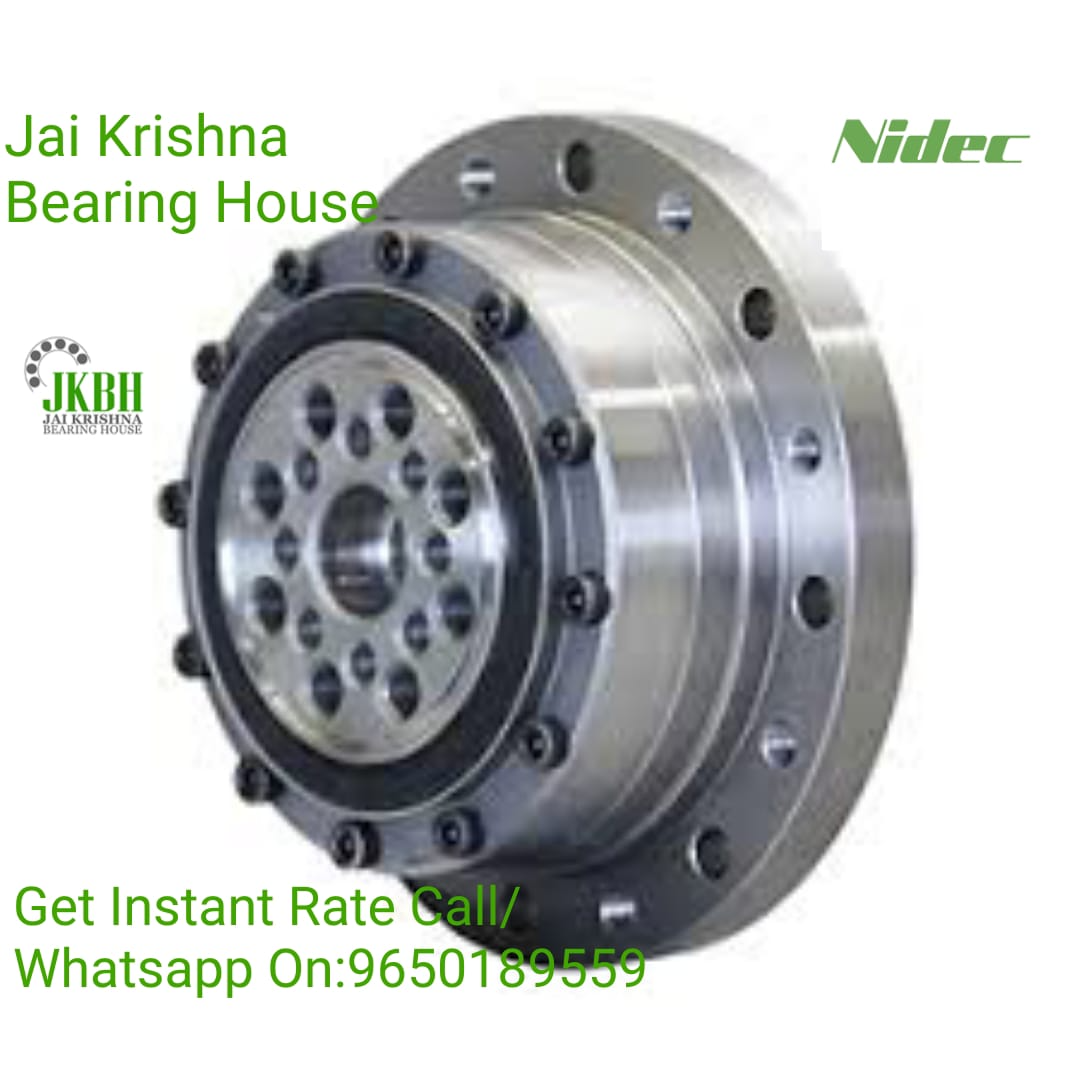
Nidec Flexwave is a strain wave gear (harmonic drive) developed by Nidec-Shimpo Corporation, part of Nidec Group. It offers high-precision, zero-backlash, and compact gearing, ideal for robotics, automation, aerospace, and medical systems.
🧠 How It Works: Basic Principle
Flexwave (harmonic drive) systems consist of three key components:
Wave Generator
An elliptical cam encased in a flexible bearing
Rotates and flexes the spline gear
Flexspline
Thin, flexible cup-shaped gear with external teeth
Slightly fewer teeth than the circular spline
Circular Spline
Rigid internal gear with more teeth than the flexspline
Stationary or housing component
⚙️ Working Principle
As the wave generator rotates, it deforms the flexspline, engaging its teeth with the circular spline at two opposite points.
Due to the slight tooth difference, the flexspline rotates slowly, achieving high gear reduction in a compact form.
This results in zero backlash, high torque, and smooth motion.
📊 Key Features of Nidec Flexwave
Feature Description
Zero Backlash Perfect for precision motion applications
High Torque-to-Weight Ratio Compact design but handles large loads
Compact and Lightweight Ideal for space-constrained systems
High Repeatability Essential for robotic and CNC positioning
Efficiency 70–85% depending on size and load
Hollow Shaft Options Allows cables or shafts to pass through center
High Gear Ratios Typically from 30:1 to 160:1 or higher
🔩 Product Variants
Nidec Flexwave comes in various types and frame sizes:
CSF Series – Component sets (Wave generator, flexspline, circular spline separately)
SHF Series – Hat-type flexspline (compact and suitable for robots)
Hollow Shaft Types – For cable routing in robotic joints
Fully Integrated Gearboxes – With flange and mounting holes
🧠 Advantages Over Traditional Gearboxes
Flexwave Planetary/Spur Gears
High precision (zero backlash) Limited precision (some backlash)
Lightweight and compact Bulky for same reduction
High gear reduction in one stage Needs multiple stages for same ratio
Better torque density Lower torque-to-size ratio
🤖 Common Applications
Industrial Robots – Joint actuators for collaborative and articulated robots
Medical Devices – Surgical robots and imaging equipment
Aerospace Systems – Lightweight, precise gear drives
CNC Machines – 5-axis rotary tables and high-precision indexing
Automated Guided Vehicles (AGVs) – Compact drives for steering and wheel units
📦 Sample Model Code (Example)
FHA-17C-50-E200 might mean:
FHA: Harmonic drive actuator with servo motor
17C: Size/frame code
50: Gear ratio (50:1)
E200: Encoder resolution (e.g., 2000 PPR)
(Nidec codes may vary based on region or configuration)
🧰 Maintenance and Considerations
Low maintenance: Long service life due to minimal wear
Lubrication: Factory-sealed with grease; some versions may need periodic re-greasing
Avoid Overload: Though strong, exceeding rated torque can damage the flexspline