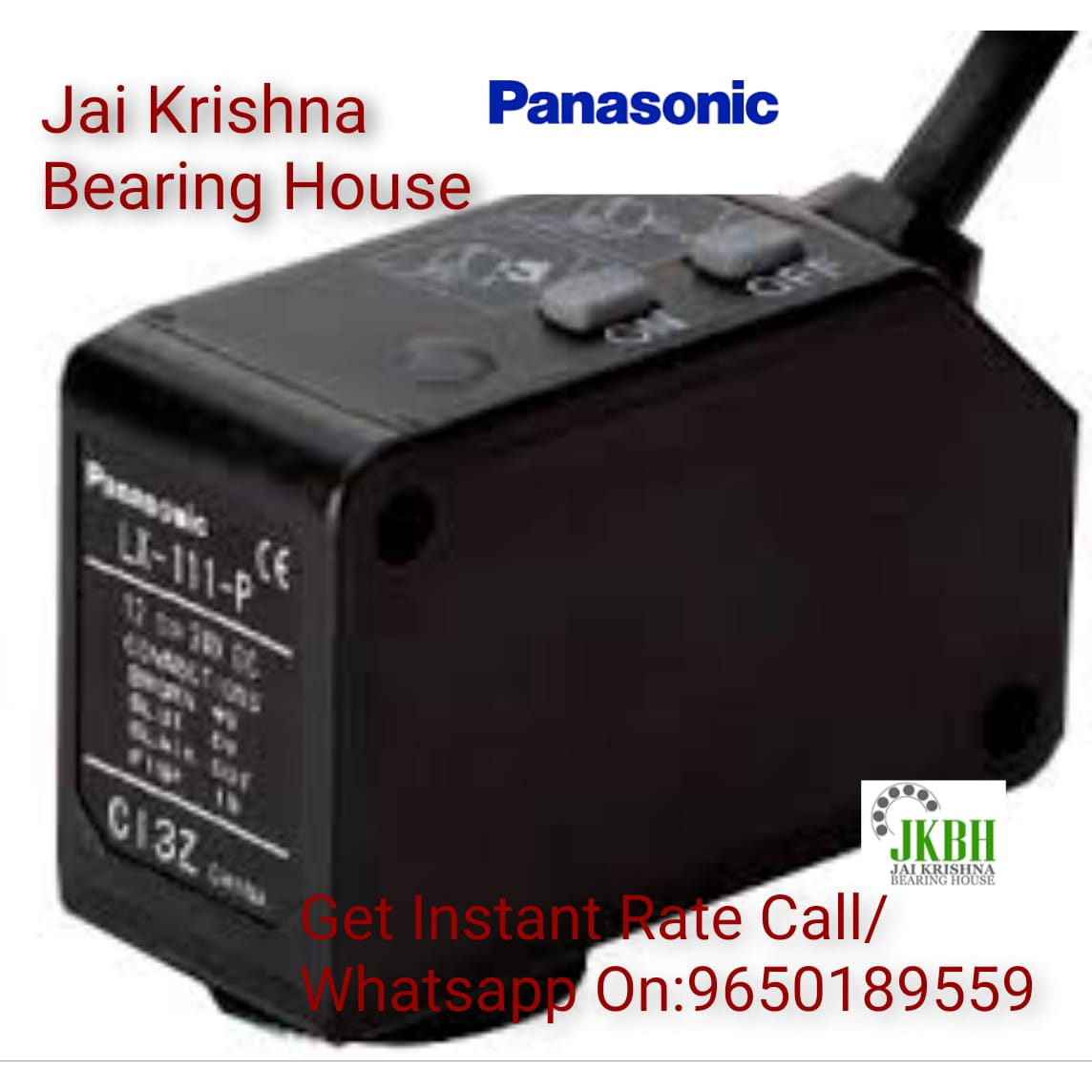
Panasonic Sensors in detail — including the different types, technologies, applications, and standout features. Panasonic is a global leader in automation and electronics, and its sensor range is used extensively in factory automation, industrial machinery, robotics, medical equipment, and consumer electronics.
🔎 Overview of Panasonic Sensors
Panasonic offers a wide range of sensors that include:
Photoelectric Sensors
Proximity Sensors
Laser Sensors
Pressure Sensors
Fiber Optic Sensors
Area Sensors
Human Detection Sensors (PIR/IR)
Touch Sensors
Position & Displacement Sensors
Each type serves different applications based on sensing range, accuracy, object detection method, and response time.
🧠 1. Photoelectric Sensors
📦 Models: EX, CX, LX, GX, and more
How they work: Detect objects using a light beam (visible or infrared). When the beam is interrupted, it detects the presence/absence of an object.
Types:
Through-beam: Separate emitter and receiver
Retro-reflective: Reflector reflects beam back to receiver
Diffuse reflective: Emitter and receiver in one unit
Key Features:
Long sensing distances
High-speed detection
Adjustable sensitivity
Compact models for tight spaces
Applications: Packaging lines, conveyor systems, bottling plants
🧲 2. Proximity Sensors (Inductive & Capacitive)
📦 Models: GX-F/H Series (Inductive)
Inductive: Detect metallic objects without contact
Capacitive: Detect non-metallic materials like plastics, glass, or liquids
Features:
Dustproof and waterproof (IP67)
Fast switching time
Maintenance-free solid-state design
Applications: Detecting metal parts, bottle level detection, object presence
🎯 3. Laser Sensors
📦 Models: HG-C Series
How they work: Use a focused laser beam to detect small parts or measure distances with high accuracy.
Features:
Micron-level accuracy
Built-in amplifier models
Compact housing
High repeatability
Applications: Electronics assembly, thickness measurement, robotic positioning
🌐 4. Fiber Optic Sensors
📦 Models: FX-500, FX-300 Series
Fiber sensors use a remote fiber cable to deliver and receive light, allowing detection in tight, hot, or hazardous environments.
Features:
Remote sensing capability
Wide variety of fiber heads (thin, heat-resistant, flexible)
High response speed (up to 35 μs)
Applications: Semiconductor machines, packaging lines, cleanroom equipment
💨 5. Pressure Sensors
📦 Models: DP-100 Series
Used to monitor pneumatic or hydraulic pressure in automation systems.
Features:
Digital display
Compact size
High precision & fast response
Multiple pressure ranges available
Applications: Pneumatic systems, leak testing, HVAC, fluid control
🧩 6. Area Sensors (Light Curtains)
📦 Models: NA1 Series
Light curtains that detect objects over a wide area — like a grid of beams.
Features:
Wide detection range (up to 2m or more)
Thin beam pitch (for detecting small objects)
Used for safety and part detection
Applications: Part counting, box filling, safety interlocking
👁️🗨️ 7. Human Detection (PIR, IR)
📦 Models: EKMC, EKMB Series
PIR (Passive Infrared) sensors detect motion from humans or animals based on infrared energy.
Features:
Ultra-low power consumption (great for battery-powered devices)
Long detection range (up to 12m)
Compact modules for integration into electronics
Applications: Lighting control, home automation, occupancy detection
✨ 8. Touch and Force Sensors
Panasonic also makes thin, capacitive-type touch sensors and piezo sensors used in interface panels and smart surfaces.
Applications: Smart home devices, automotive controls, consumer electronics
💻 Software & Integration
Many Panasonic sensors are:
Easy to integrate with PLCs, HMIs, and SCADA systems
Offer NPN or PNP output types
Use standard industrial protocols like IO-Link (on select models)
Come with diagnostics and self-diagnosis features
✅ Why Choose Panasonic Sensors?
Strength Description
🔧 High reliability Built for harsh industrial environments
🎯 Precision Great for high-accuracy measurement
🌍 Versatile Wide variety of sensor types and models
⚙️ Easy integration Compatible with most industrial controllers
📦 Compact designs Ideal for tight spaces and embedded applications