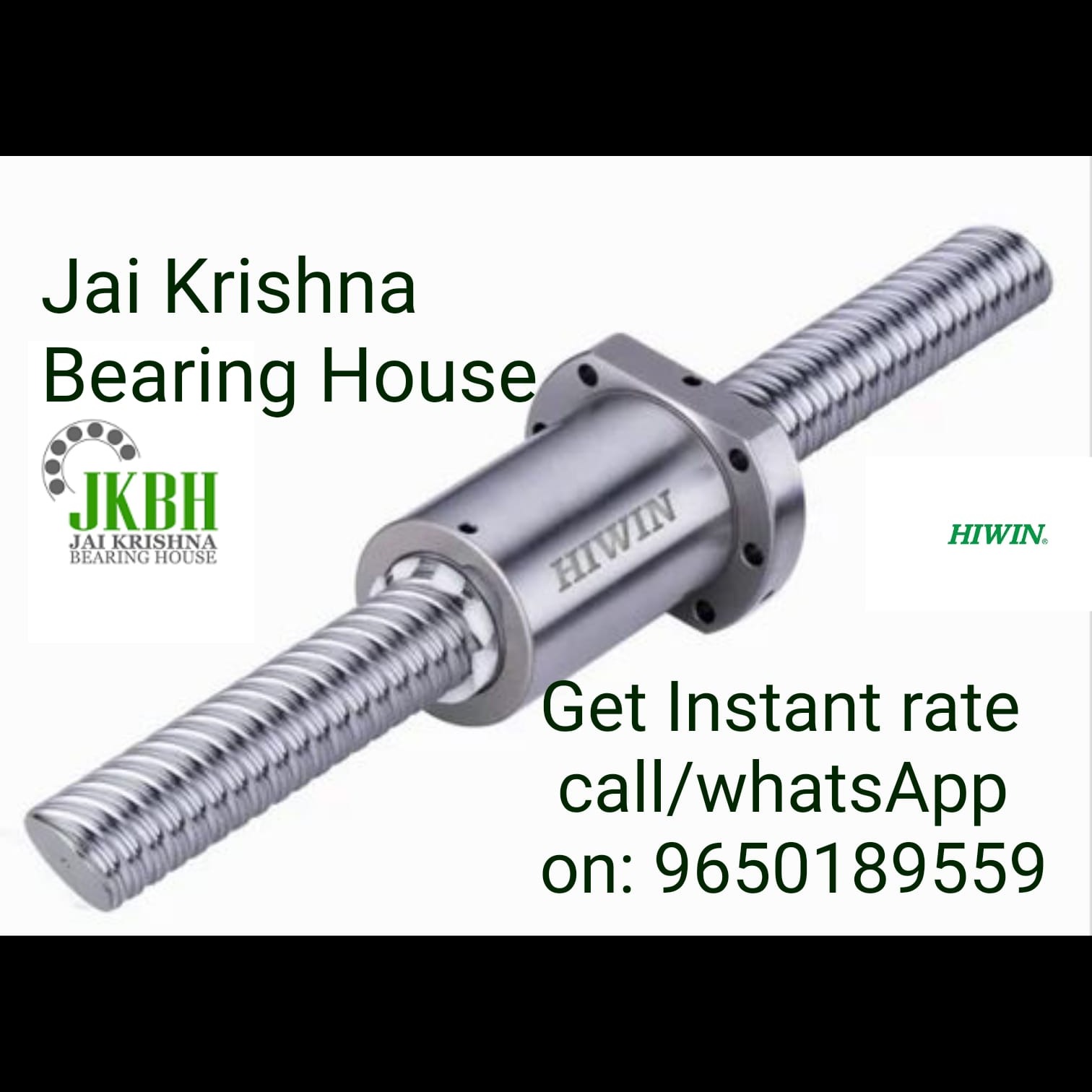
A ball screw consists of:
A screw shaft (threaded rod)
A ball nut
Ball bearings (steel balls) circulating inside the nut
Instead of sliding friction (like in lead screws), ball screws use rolling friction, which drastically improves efficiency and lifespan.
⚙️ Key Components Explained
1. Screw Shaft
Hardened and ground steel
Precision threads (helical grooves)
Defines lead (distance moved per rotation)
2. Ball Nut
Contains internal grooves matching the screw
Houses recirculating balls
Moves linearly along the shaft
3. Ball Bearings
Small steel balls that roll between nut and shaft
Reduce friction and wear
4. Recirculation System
Returns balls to the starting point after they travel
Can be internal or external (end cap or tube type)
📊 Types of HIWIN Ball Screws
1. Ground Ball Screws
High precision (C0–C5 grades)
Used in CNC machines and aerospace
Expensive but extremely accurate
2. Rolled Ball Screws
Lower cost
Precision grades (C7–C10)
Used in general automation
📏 Important Specifications
🔹 Lead
Linear distance moved per one rotation
Example: 5 mm lead → nut moves 5 mm per revolution
🔹 Diameter
Common sizes: 12 mm, 16 mm, 20 mm, 25 mm, etc.
🔹 Accuracy Grade
C0 (highest precision) → C10 (lowest)
Determines positioning accuracy
🔹 Preload
Eliminates backlash (play)
Improves stiffness and precision
🔧 Authorized / Trusted Dealers
🏭 Jai Krishna Bearing House
4.9
•
Bearing supplier
•
Open
📍 Chandni Chowk, Delhi
One of the authorized HIWIN distributors in North India
Supplies:
HIWIN ball screws
Linear guideways & CNC components
Strong experience with OEM machine builders & automation industry